Intro: Reflecting, Harvesting
I sat with these remarks for a long time before deciding to share them publicly. Below are the remarks and poems I originally delivered in January during the Poets Party celebrating my inauguration as Carrboro’s Poet Laureate. Five months have passed since then, and in that time I have become even more certain that poetry is not merely an art form or decorative language, but a civic technology of care.
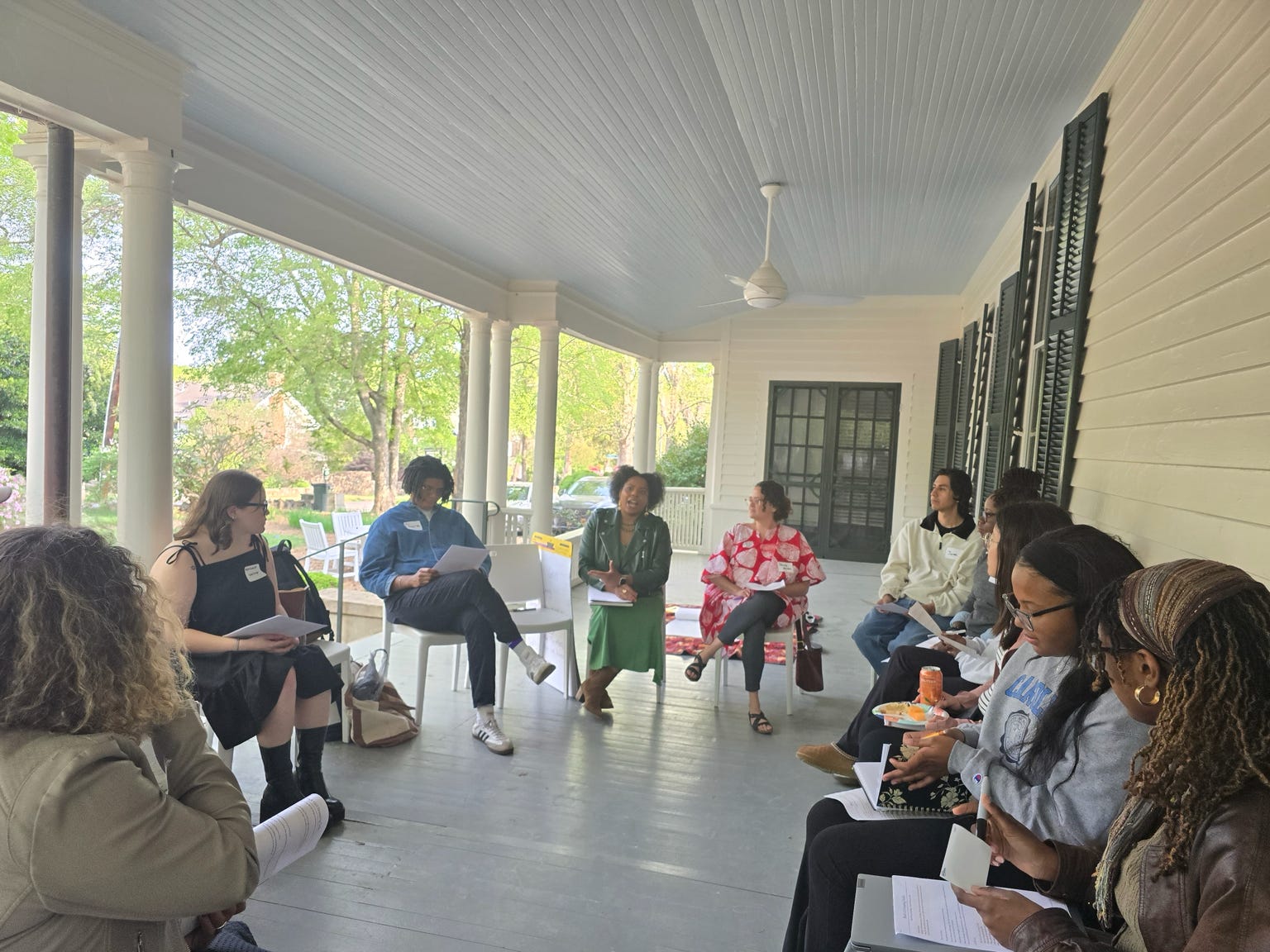
Over the past several months, I’ve had the profound privilege of sharing the work of teen girl poets at Town Council meetings, facilitating poetry conversations in carceral spaces, and helping incarcerated people reflect on their own definitions of love, freedom, and self-sufficiency. I’ve partnered with communities at UNC through programs like Black Girl Dreaming, where women of color gathered to think collectively about how to design lives rooted in creativity, clarity, and ethical relationship rather than burnout and extraction. I’ve shared poetry in spaces like the Chapel Hill Public Library during conversations about Black working-class histories in Chapel Hill, reflecting on the ways narrative justice can restore dignity to the people whose labor forms the foundation of our communities.
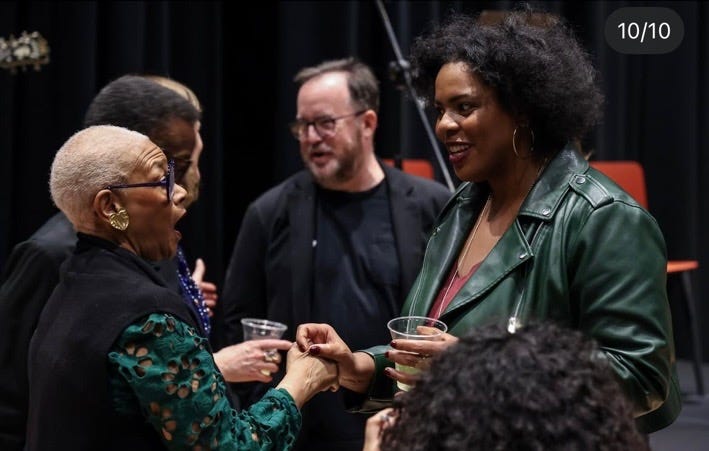
This spring also brought unexpected moments of visibility and reflection, including being honored as one of Chapel Hill Magazine’s Women of Achievement and appearing on the magazine’s cover. The experience prompted me to think more deeply about the relationship between poetry, public life, and service. I spent so many years inside institutions where feeling unseen was normalized that it has been deeply moving to witness the ways community spaces—libraries, bookstores, classrooms, porches, town halls, and concert halls—have become the places where my work feels most alive and most understood.
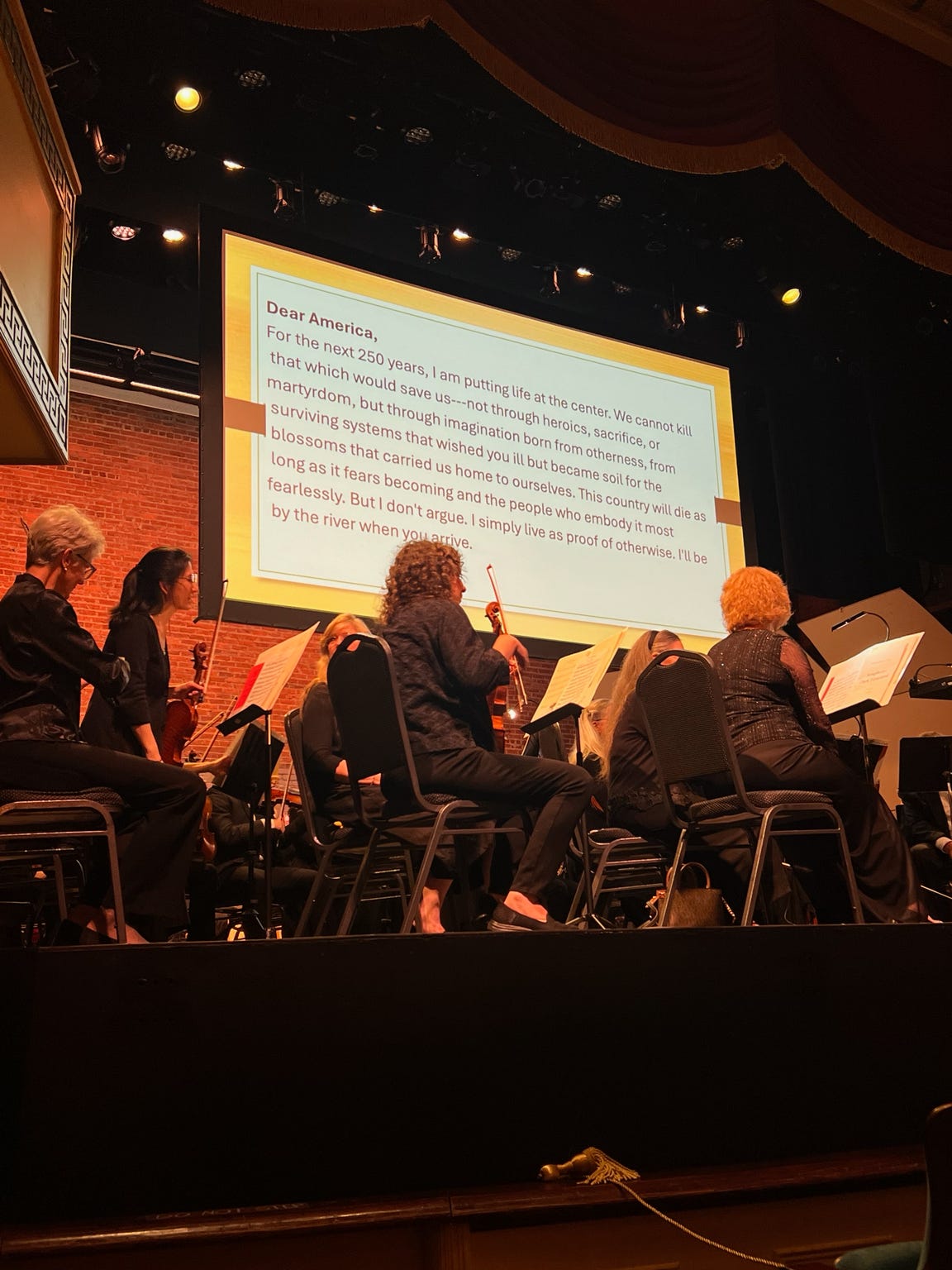
One of the most meaningful experiences of the year was participating in the Durham Symphony Orchestra’s Letters to America project alongside North Carolina Poet Laureate Jaki Shelton Green and Black woman composer Brittany Green. Through poetry and orchestral performance, we were invited to imagine what America might become if it truly listened to Black women. That question continues to stay with me. Increasingly, I believe poetry gives us the tools not only to critique the world as it is, but to practice envisioning the world otherwise.
I’ve also been moved by the smaller, quieter moments: mothers and daughters writing poems together at Carrboro Day, high school students reading work aloud in public for the first time, people lingering after events because they wanted to continue talking about race, masculinity, grief, spirit, memory, or the earth. The ways we care for each other are directly connected to the ways we care for the world itself. Poetry helps us practice that care. It teaches us to pay attention. To interpret. To remain porous to wonder without turning away from weariness.
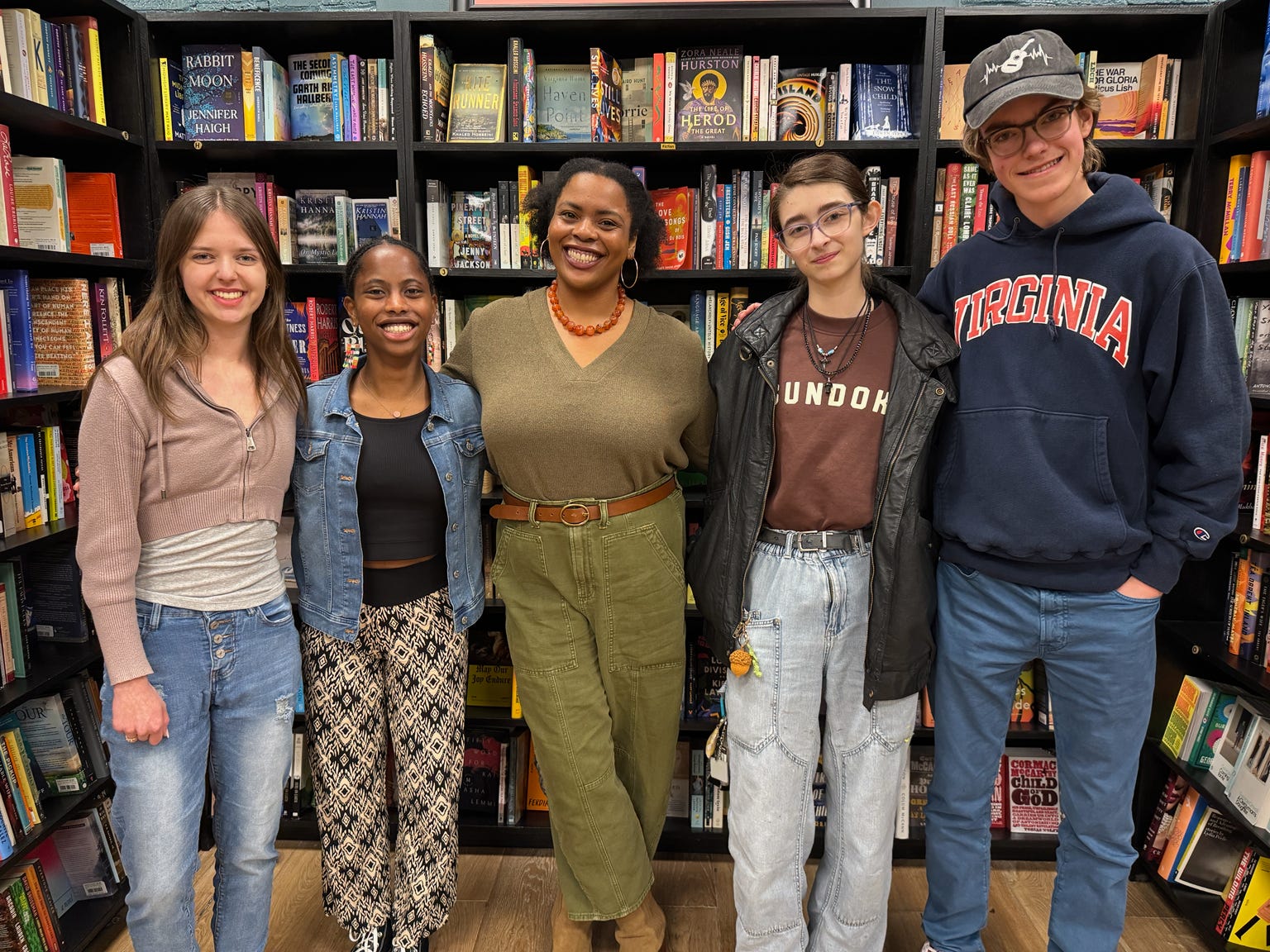
This summer, alongside writer and teaching artist Omaria Sánchez Pratt, I’ll continue building community writing spaces rooted in food, fellowship, Black study, and creative practice. At our upcoming gathering, we’ll share pancakes and quiche while listening to Martin Luther King Jr.’s In Search of Freedom vinyl and the music of Roy Ayers and Fela Kuti, thinking together about liberation not only as a political condition, but as an emotional, spiritual, and imaginative practice.
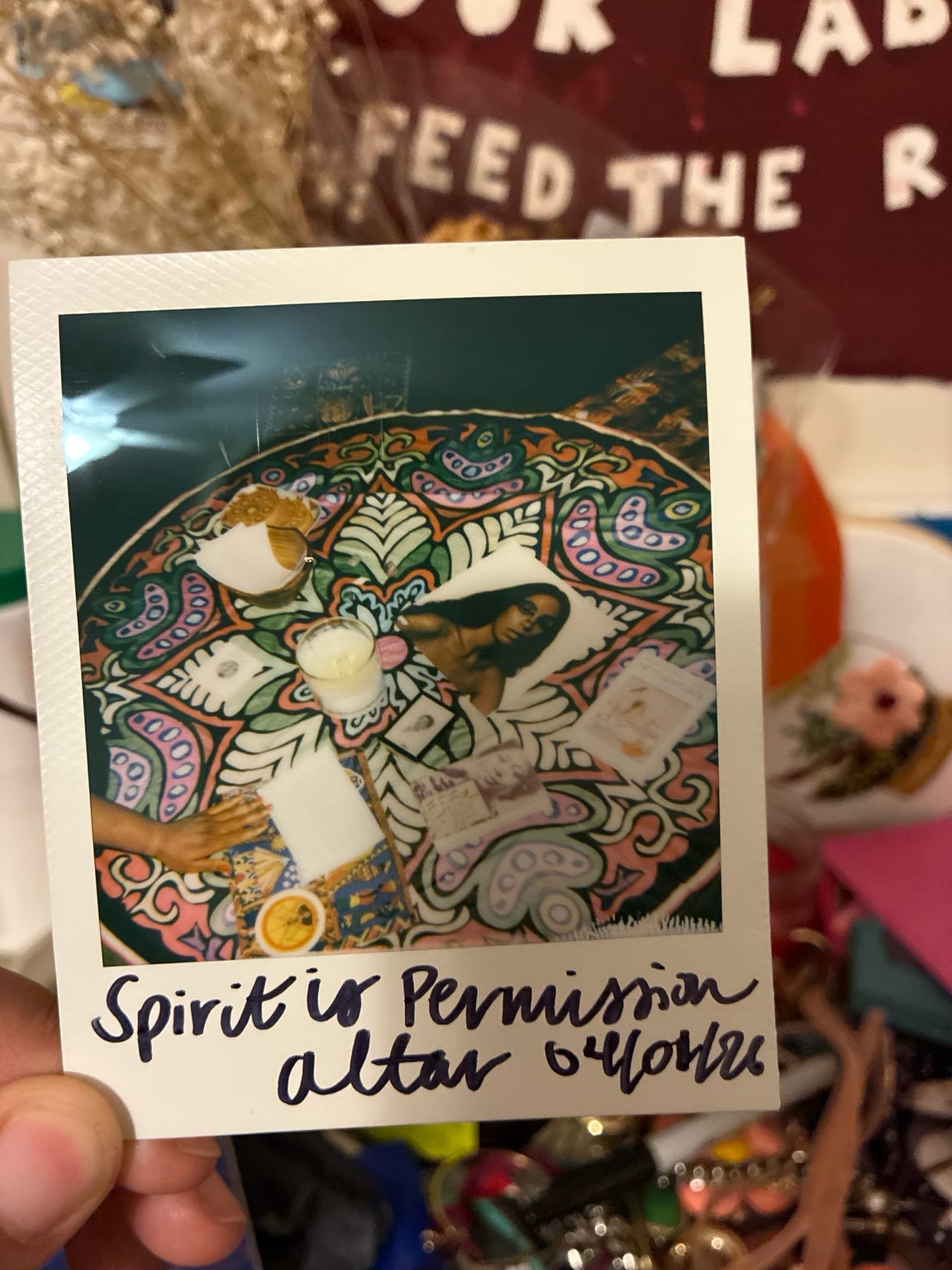
That work is deeply connected to the philosophy I’ve been developing through my workshops and writing: Confessionalist Rootwork. Through courses like Spirit is the Permission, I invite participants to study their lives as texts, learning to interpret symbols, desires, contradictions, and longings in order to make more integrated and spiritually grounded decisions. Poetry is part of that process. The same imaginative techniques we use to write poems are the ones we use to envision freer versions of ourselves and more loving ways of being together.
Spirit is the permission.
Spirit is the method.
Spirit is the manifesto.
Poets Party Remarks
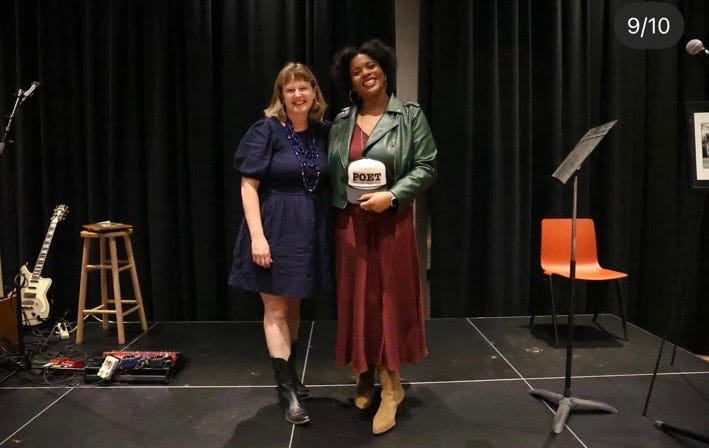
Originally delivered in January 2026 at the Poets Party celebrating my inauguration as Carrboro Poet Laureate.
Thank you for being here tonight. I’m truly honored to be welcomed into this room and into this lineage.
The Shape of a Promise
Do you know what it takes
to stay the course
in the absence of sight
of light
of the promise of a happy ending?
The shape of a promise
is held by the hands of many—
hands that shake
Split open upon fear’s sharp edges,
yet refuse to let go.
It takes us all to bear the weight
that may have crushed one heart alone.
It’s tenderness that lifts the fallen sky
that lays new roads
where mouths of hate swallowed whole.
I think of my Papa in his clay-kissed pickup,
flying me down Georgia dirt roads,
red dust rusting the air,
saying:
we come from people
who have always made
a way out of no way.
Remarks
I want to begin by saying that for me, poetry has never been only about performance.
Poetry, for me, is a practice.
It’s a way of keeping the interior a warm, well-lighted place—to borrow Hortense Spillers’ phrase—so that the worlds we create as an extension of our interiors are rooted in love rather than fear and legacy rather than ego.
We tend to the sick because we have been sick.
We tend to the vulnerable because we have been vulnerable.
We tend to the dreamers because we are one and the same—
because the poems we write have always been the trace of dreaming.
To be a poet is to live in service of the world.
Our vocation is to protect its wonder,
and to honor its weariness.
And I believe—deeply—that before we can show up in jails,
in shelters,
in schools,
in the places where people are most in need of the power of poetic voice,
we have to cultivate our interiors first.
Because as poets, we have a responsibility to steward a world
in which growth is the standard,
and emotions are tools of expansion —
meant to be felt and learned from,
not managed or suppressed.
So we have to be honest about how we treat one another—
not just on stage,
but in the quiet, ordinary places where character is formed.
Because poetry is not just about a good show
It’s about what kind of humans we are becoming
in the process.
Tonight, I want to name this clearly:
I will sit with the fragility of this one human life,
unafraid in my heart
of its fleeting awe.
That is the posture I want to bring to this work.
Not fear, performance, or domination of space.
But presence.
Poetic listening.
Care.
Over the next two years, that posture will take shape in a few different ways.
Through spaces that invite Black girls and young people to dream without being rushed or corrected.
Through intergenerational gatherings where children and caregivers read and write together — not separately — so imagination stays communal.
And through public work that makes poets visible as caretakers and conjurers of language, not just performers for special occasions.
All of it is rooted in the same question:
how we build places that are warm enough for people to grow inside?
Because poetry, at its best, is not an abstract vessel of beauty.
It is testimony, justice, and a technology of care.
And when we get this right—
when we steward the wonder of this world,
when we honor its exhaustion,
when we tend to the people who have been overlooked—
we are not just writing poems.
We are practicing how to live.
Thank you.
Black is a Place We Carry
black is a place we carry like the tiny polaroid lou took of us that i keep
in my wallet sometimes i take it out and look to remind myself of a day
i felt close to everybody because i was safe with you the picture took
so long to develop for a while we were just faint strokes of memory
in a frame of white milk we were there i knew underneath it all
but the pregnant gap between the moment and the memory it becomes is
a particular canal of agony i know i’m black in all my memories
but who was i in the moment i am so fond of that picture
of us because it is weightless soothing familiar how much
of my face will i choose to carry in this life just enough to know i’m home